What is a Neighbourhood Plan?
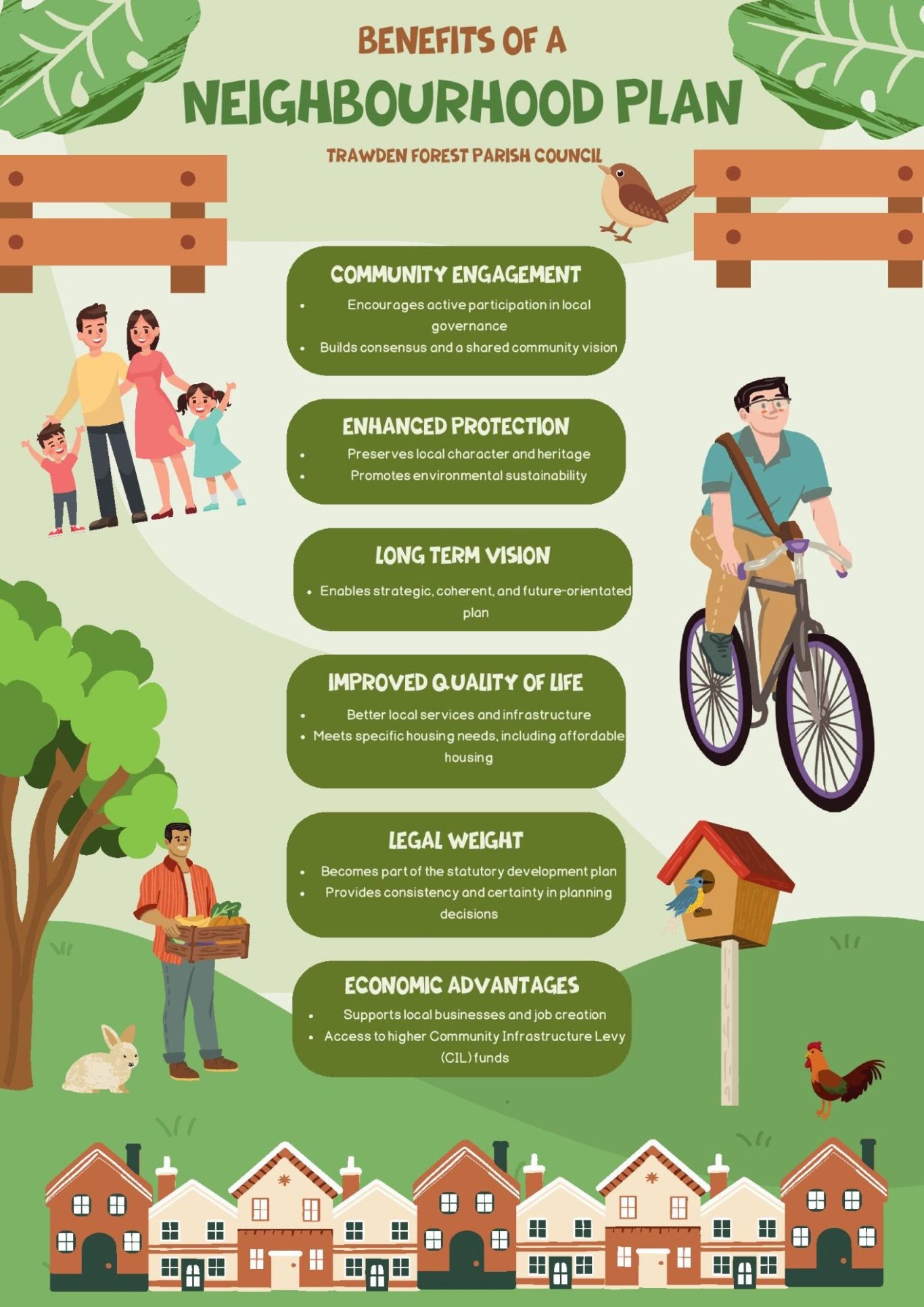
A neighbourhood plan is a document that sets out planning policies for your area and can:
- Protect local green spaces;
- Encourage better designed places;
- Bring forward housing that genuinely meets local needs.
It’s written by the local community and helps get the right types of development in the right place.
Neighbourhood planning helps local people shape the future of their area.
An update regarding the progress of the Neighbourhood Plan review.
24th September 2026
The Steering Committee meet monthly to review any recommendations and actions. The first meeting after the summer, was held in September. However, the Plan is not currently at the stage where it is able produce a public shortlist or proposal of sites to include in the plan.
In order to produce a shortlist we need to follow a statutory process called a Strategic Environmental Assessment (SEA), we have not been able to complete this yet because we are awaiting some information from Pendle Council - we are expecting to receive that soon, and we will then be able to move onto the next stage, supported by our external neighbourhood plan specialists.
We understand the eagerness of our residents for information on this important review, but do please bear with us. The Parish Council will share the relevant details and updates of the project, publicly, as soon as it is appropriate in this ongoing, staged process.
In the meantime, we intend to update the website with information about other areas of the neighbourhood plan we have been working on, including the list of proposed new location for allocation as Local Green Spaces
Please note that the website pages that are linked to the Neighbourhood Plan review, above are currently under construction and therefore have no, or limited data.
These pages will be updated as and when the information has been approved by the Parish Council and Consultants.
01
We already have a Neighbourhood Plan for Trawden Forest – why do we need a new one?
Our current plan was written quite a few years ago. Since then, national planning policy has changed and some of our policies need updating to be useful. There are also topics we would like to include that aren’t in the current one.
02
Are there things the neighbourhood plan cannot do?
Some issues fall outside our scope, such as health provision, education, and strategic transport issues. That’s because other organisations are responsible for planning for these. But we can do our best to influence them
03
Does this mean that we will have more housing here?
The government require all areas across the country to deliver housing. Here, Pendle Borough Council have recently adopted a new Local Plan, which covers the whole district.
Our neighbourhood plan cannot ‘stop’ development taking place, but it can influence what it looks like and where it is located. We can also protect areas that are special to us, such as green spaces, local views, historic buildings and so forth.
The Neighbourhood Plan can set out our priorities for the area, which in turn can help to attract funding to deliver new facilities and other infrastructure.
04
How does the Trawden Forest Neighbourhood Plan differ from the Pendle Local Plan?
The Local Plan covers the whole district while our plan is just for Trawden parish. Our policies will add additional detail to the Local Plan ones, to make them more tailored to our particular circumstances.
A new Local Plan is being developed for Pendle, and we will need to keep a close eye on what that says and how it impacts our area. It’s like to allocate more homes and we need to influence that.
05
Can we use the plan to stop further housing development in our parish?
No, neighbourhood planning is not about stopping development, rather shaping it. Where housing is allocated, for instance, within the recently adopted new Pendle Local Plan, the neighbourhood plan could not be used to stop that. But we can use it to plan how that housing might look, where it should and what supporting infrastructure is needed.
06
How long will it take to write the plan?
We hope to have a draft of the plan to share by October. We will then consult local people on it to make sure the community is happy with it. It will be ‘examined’ to check that it meets legal requirements, and ultimately there will be a local referendum to decide if the community want to adopt it.
07
Who is responsible for preparing the neighbourhood plan?
The Parish Council is the official lead body; however, it is vital that the plan is prepared with the community. We have a Steering Group comprising local councillors and volunteers.
08
What sort of issues could the neighbourhood plan include?
The plan is first and foremost a planning policy document. It will include topics that are important to us and where we want to have more influence over. The value of the neighbourhood plan will be to add extra local detail so that we can influence development taking place here as much as possible. Based on the feedback so far, our Neighbourhood Plan will likely include policies to do the following:
Setting out our housing needs – setting out the sorts of homes needed here in terms of their size, whether they are to buy or to rent and how affordable they are.
Making sure development is in keeping with local character and is sustainably designed – we are preparing an updated Design Code for the parish, which will set out how development should look for each designated Character area. This means that developments will contribute positively to the look and feel of each area. We are also including a policy to encourage people to develop sustainably to help mitigate the impacts of climate change.
Safeguarding the environment – We can identify and map out the important habitats and wildlife corridors here that should be protected and where possible enhanced. We will also protect special green spaces in the community from inappropriate development.
Community facilities – we can identify where additional/expanded local facilities might be needed.
Getting around the area – we have limited influence on strategic transport like roads and traffic (that is responsibility of Lancashire County Council). But we can promote more walking and cycling opportunities.